
Running a Sex Offender Check in Parmer County
The official starting point is the Texas Public Sex Offender Registry. Texas DPS maintains that statewide system from information sent by local registration authorities. Select Parmer in the county field when the goal is a county-wide view. A name search is better when the person is already known, while an address or map search gives context around a home, school route, or other place used by a family.
No single channel answers every question. The state registry supplies public profiles and geographic tools. The Parmer County Sheriff's Office handles local registration within its jurisdiction, and city police may fill that role inside a municipality. The National Sex Offender Public Website adds other states and territories. Before starting, gather a full name, any known alias, an approximate age, and the most relevant city or address. Those details reduce mistaken identity.
The DPS registry search page shows the public entry point used for Parmer County sex offender checks.
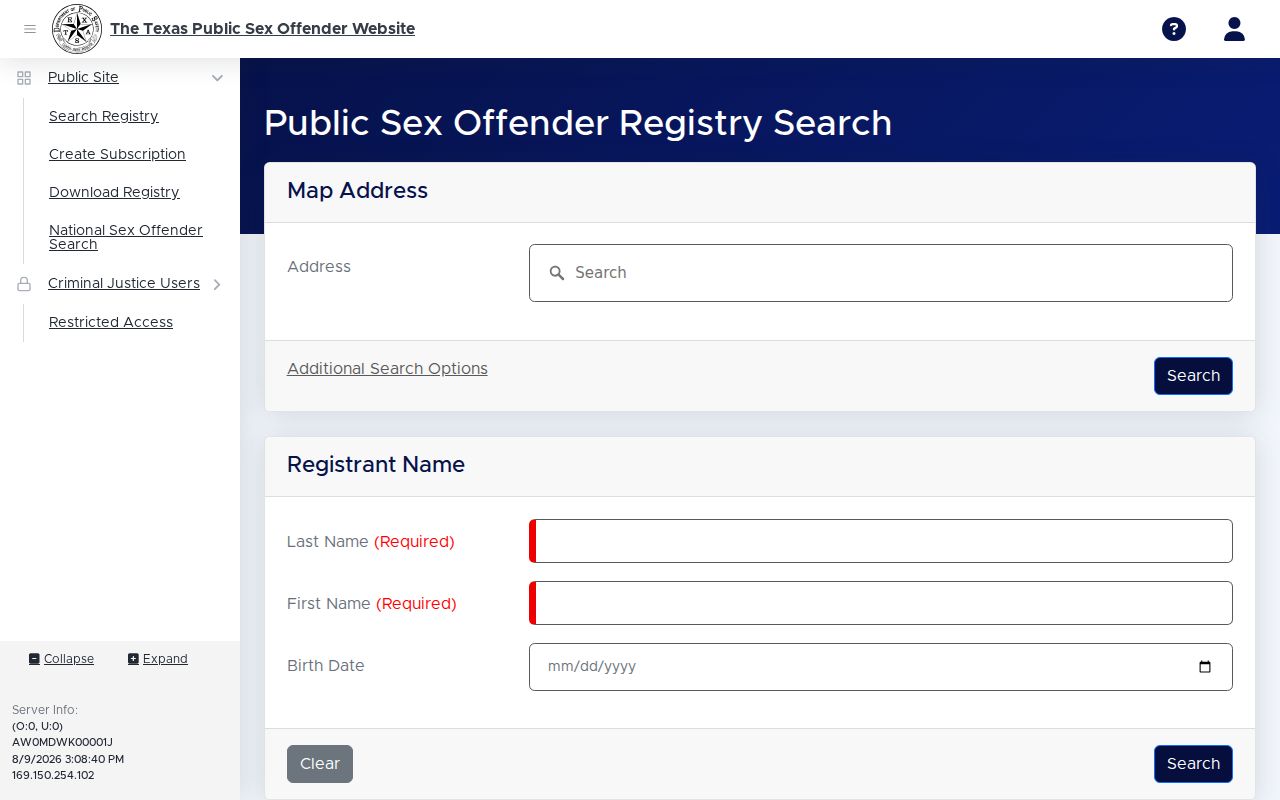
The interface lets a reader choose the search method that matches what is already known instead of treating every registry question as a name lookup.
Parmer County Registry Authority
The Parmer County Sheriff's Office is the local registration authority for people living in its jurisdiction. Its office and the Parmer County Jail share the county law-enforcement address at 300 Fourth Street in Farwell. The public telephone number is 806-481-3303, and the published fax is 806-481-3305. City police can serve as the registration authority within municipal limits, so callers should confirm the right office before appearing.
Parmer County Sheriff's Office
300 Fourth Street
PO Box 860
Farwell, TX 79325
806-481-3303
Call first for local registration or suspected noncompliance. Public lobby hours documented for written complaints are Monday through Friday, 8:00 a.m. to 5:00 p.m.; registration hours must be confirmed.
Local staff verify required facts and transmit registration data to DPS. That division of work explains why a local question may need a sheriff call even when the public profile appears on a state website. It also prevents a needless trip to the District Clerk or County Clerk, neither of which is the local registry office.
Searching the Texas Public Sex Offender Registry
DPS offers public search modes built around a person or a place. Start broad enough to catch a spelling variation, then use the profile's identifiers before deciding that a result is the intended individual. Address and map results show nearby listings, but a point on a map is not proof that a person violated a boundary or other legal rule.
- Open the DPS public registry and review its conditions of use.
- Choose name, address, county, ZIP, or map search based on the facts already known.
- For a local browse, select Parmer County and use current location filters available on the live form.
- Open a possible profile and compare aliases, age, physical traits, address, offense, and status before relying on it.
| Field or Mode | Type | Required | Use |
|---|---|---|---|
| Search by Name | Tab or mode | Mode-dependent | Find a known person by surname and optional given name |
| Last Name | Text | Name mode | Use exact or partial conventions shown on the live form |
| First Name | Text | Optional or unspecified | Narrows similar surname results |
| Search by Address | Tab or mode | Mode-dependent | Runs a location and radius-based community search |
| City, County, ZIP | Text or select | Filter-dependent | Select Parmer for county results or use a five-digit ZIP |
| Map Search | Map | No | Browse public geographic results |
Public controls can change. Secure law-enforcement training materials show more filters, but those controls should not be assumed to exist on the public form. Use only what the live public registry displays.
Parmer County Cross-Border Searches
Parmer County borders New Mexico, so a Texas-only search can miss a relevant listing across the state line. The Justice Department's NSOPW search is the proper second layer because it queries participating state, territorial, and tribal registries. It is especially useful when a known address, work route, or family destination crosses the border. Search both the Texas registry and NSOPW when location matters.
The federal NSOPW portal illustrates the national search layer assigned to this Parmer County registry page.
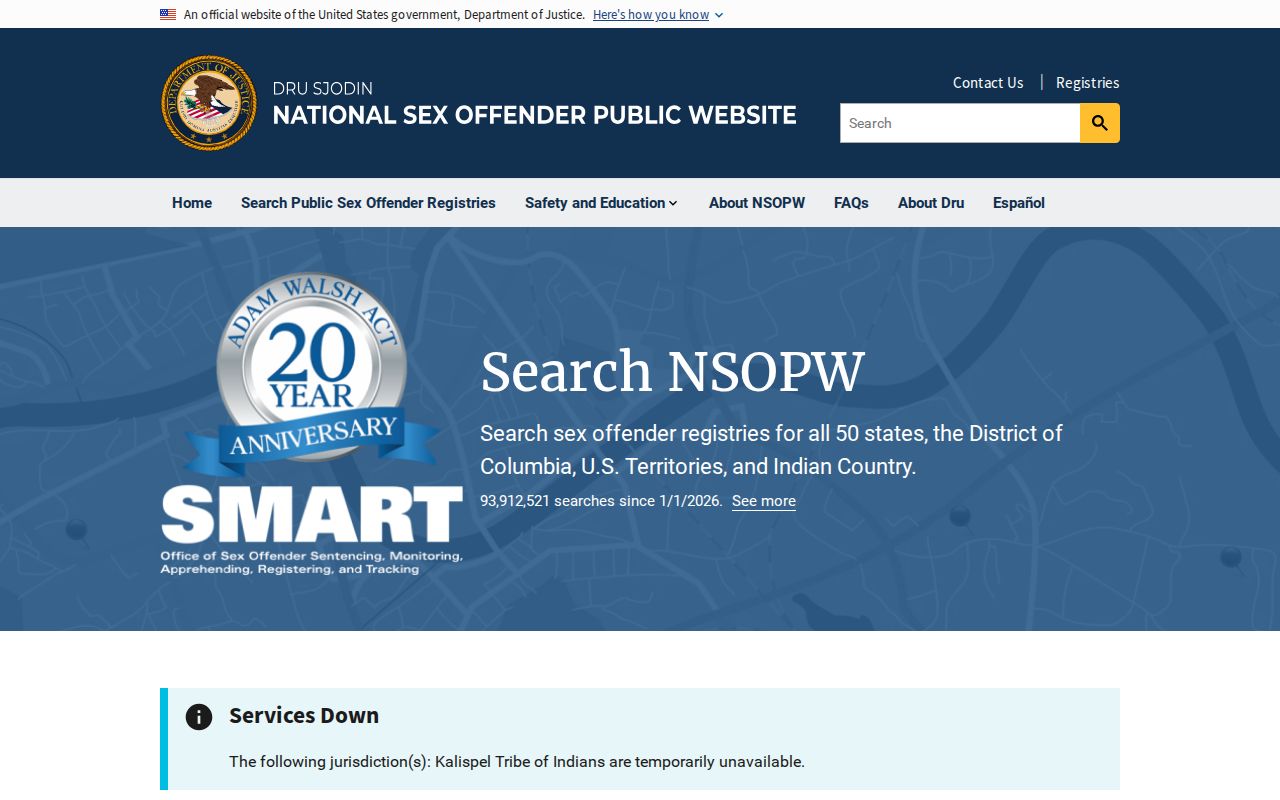
NSOPW broadens geography, while the Texas profile remains the better source for Texas-specific status and public fields. If the two displays appear inconsistent, contact the agency listed as the registering jurisdiction rather than guessing which entry is newer.
Note: A national search supplements the Texas registry; it does not replace verification with the local registration authority shown on the profile.
What a Registry Profile Shows
A public Texas profile combines identity, location, offense, and compliance information that Chapter 62 permits DPS to publish. Readers should compare several fields, not only a photograph or shared name. Some public fields appear only when the information exists and disclosure is authorized.
| Name and Aliases | Primary name and reported alternate names used to distinguish identities |
|---|---|
| Photo and Description | Photograph, sex, race, age or date of birth, height, weight, eye and hair color, and visible marks when public |
| Location | Registered address or other geographic description as public disclosure rules allow |
| Offense | Offense description or statute, conviction or adjudication date, and victim age category when authorized |
| Registration Details | Reporting jurisdiction, registration status, compliance information, and applicable supervision indicators |
| Other Public Fields | Qualifying vehicle or higher-education information, scars, marks, and tattoos when present and public |
The display is a registry profile, not a full Parmer County criminal history. A court file may hold pleadings and disposition details that do not appear here. The broader Parmer County criminal history overview explains which local office holds each record type.
Parmer County Registry Privacy
Public access has firm limits. DPS identifies Social Security numbers, driver's-license numbers, private telephone numbers, online identifiers, and employer contact data as nonpublic. Information that identifies a victim is also withheld. These limits protect unrelated people and sensitive identifiers without concealing the public safety fields authorized for release.
Juvenile registration requires extra care. A court can order juvenile registration information nonpublic, and the public site is not proof that no duty or juvenile proceeding exists. Likewise, a missing employer name is not an incomplete page. It is a field the state does not publish. Readers should not try to reconstruct protected data from other sources.
Note: A public Parmer County registry result deliberately omits protected fields, so absence should not be treated as a reporting error.
Registration Requirements and Levels in Texas
Texas does not organize its public registry mainly through a simple consumer-facing Tier I, II, and III chart. Duration turns on the reportable conviction or adjudication and the exact provisions of Code of Criminal Procedure Chapter 62. Some listed offenses bring a lifetime duty. Other reportable offenses commonly carry a period linked to discharge from the sentence or supervision. Juvenile rules and early termination can change the analysis.
The DPS registration program page provides the official statewide explanation behind Parmer County registration duties.
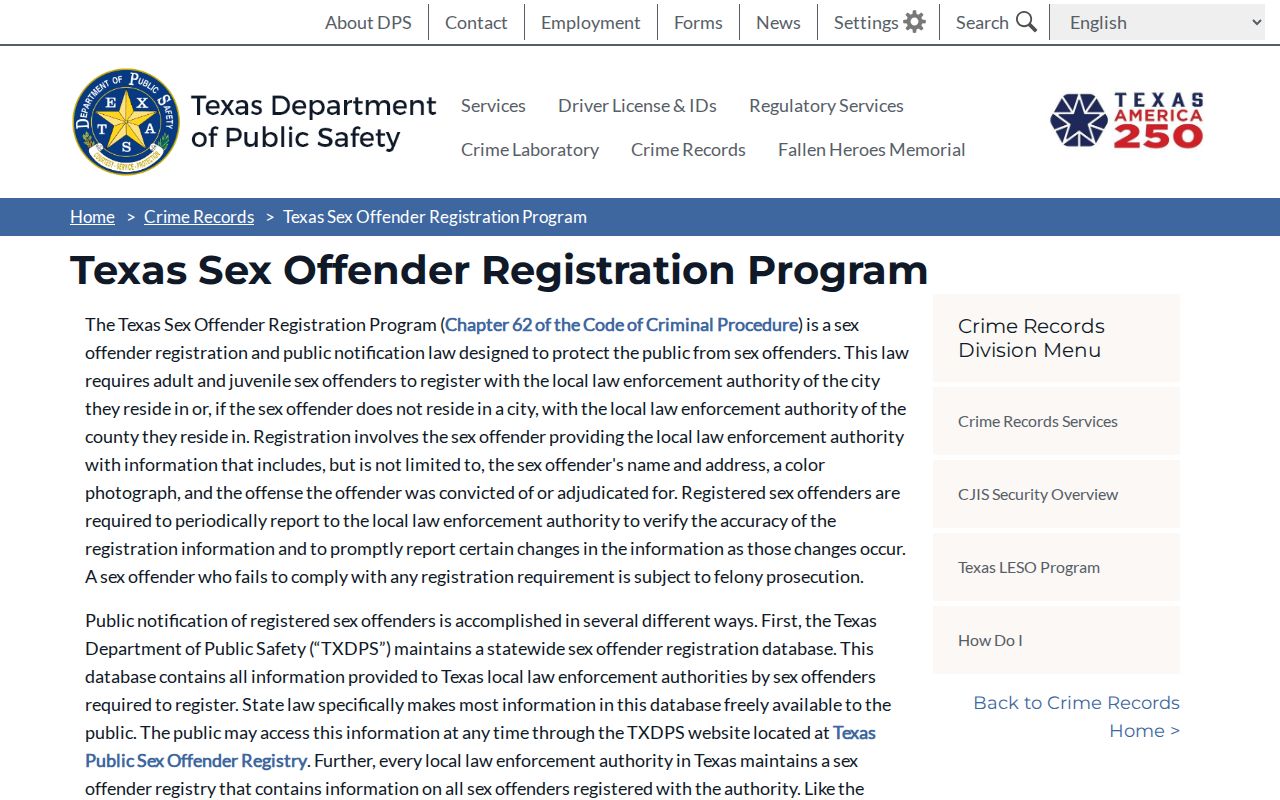
The program material reinforces why the offense and statutory category must be checked instead of assigning a label from the charge name alone.
| Texas Category | General Duration | Verification Point |
|---|---|---|
| Sexually violent or other lifetime-listed offense | Lifetime duty, subject to Chapter 62 | Check the precise offense and statutory subsection |
| Other reportable conviction or adjudication | Period tied to discharge, often ten years | Not the same as a generic federal tier |
| Juvenile registration | Court- and statute-specific | Exemption or nonpublic treatment may apply |
| Civilly committed sexually violent predator | Lifetime | Heightened verification and community notification apply |
Parmer County Registry Notification Flow
The local authority receives and verifies required registration details, makes school notification when the law calls for it, and sends data to Texas DPS. DPS then maintains the statewide public database. That path is important when information looks stale: local staff are the first source for compliance facts in their jurisdiction, while DPS controls the statewide display.
Texas also uses direct community notice in defined high-risk cases. DPS describes postcard notification to nearby homes and businesses when a high-risk offender or a civilly committed sexually violent predator moves into a community. This is a statutory notice process, not a mailing for every profile update. A reader should not infer risk level solely from whether a postcard arrived.
The flow is straightforward: registrant reports locally → local authority verifies and reports → DPS updates the state registry → required public or school notification follows.
Correcting a Parmer Registry Concern
Do not confront a person when a registry address, status, or other fact appears out of date. Save the public profile details needed to describe the concern and call the registration authority shown on that profile. For a Parmer County Sheriff's Office jurisdiction, use 806-481-3303. Inside a city, the relevant police agency may be responsible. Staff can determine whether a report reflects timing, a permitted status, or suspected noncompliance.
Failure to meet a registration duty can be prosecuted as a felony, but a map pin or old-looking date does not prove a violation. Emergency threats belong with 911. Routine compliance concerns belong with the local registration authority. This approach gives trained staff accurate facts without creating risk for the reporting person, the registrant's household, or neighbors.
Lawful Use and Community Notification
Public registry information supports awareness and practical safety planning. Families can review routes, discuss boundaries with children, and use the listed official contact when a fact needs verification. The listing does not authorize direct contact, surveillance, threats, or punishment by members of the public. It also should not be mistaken for a prediction that a person will commit a new offense.
Texas Chapter 62 is the governing registration law reflected in Parmer County sex offender records.
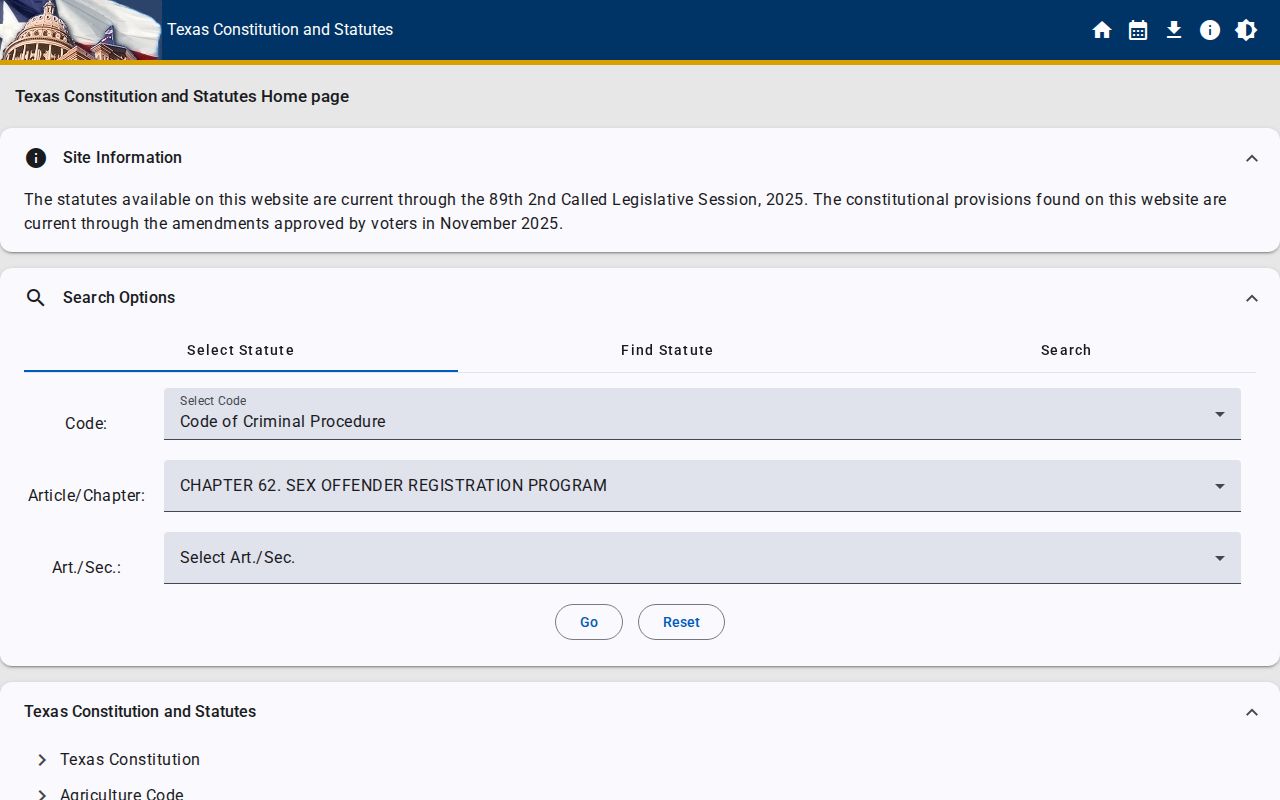
The statute sets duties and public-notification rules; it does not grant private citizens enforcement power.
Use registry data lawfully: Texas Chapter 62 does not authorize harassment, threats, intimidation, vigilantism, or another crime committed with registry information. Report concerns to law enforcement and never confront a listed person or household.