
Criminal Cases in the Parmer County Courts
Parmer County criminal cases split by the level of the charge. The 287th Judicial District Court is the general-jurisdiction court for felonies. Its District Clerk keeps the filed case record. Class A and B misdemeanors ordinarily go to the constitutional County Court, where the County Clerk is custodian. Parmer County has no county court at law. Fine-only misdemeanors may stay with one of three justice precincts, while city ordinance and other fine-only matters can remain in the Friona, Bovina, or Farwell municipal system.
This division matters because the jail does not hold the court file. The jail creates booking data. A clerk maintains pleadings, docket events, court orders, and the judgment after a prosecutor files a charge. One name can thus lead to several distinct Parmer County records. Start with the likely charge level, then confirm the court and cause number before asking for documents.
Calling for Parmer County Case Files
The District Clerk listed in the county directory is the direct channel for a felony case filed in Parmer County. Call 806-481-3419 and be ready with the defendant's name, an approximate filing year, and a cause number if one is known. Ask whether the clerk can search by name and date of birth, which years are digitized, and whether an older case needs an archive pull. The counter is in the Parmer County Courthouse at 401 Third Street in Farwell. Confirm counter hours before travel because the research did not establish a public schedule for every clerk office.
A good document request names the item. A docket sheet is a timeline, not the whole file. Ask for the charging instrument, key motions and orders, judgment, sentence, and certification when those parts matter. The county has not posted a current criminal copy and certification fee schedule in the official sources reviewed, so request the price and delivery options from the clerk.
How to Search Case Records
No official public Parmer County name-search page was verified. The sound path combines the filing clerk with re:SearchTX, a statewide electronic court-record service whose participating-court coverage, remote documents, registration rules, and fees can vary. A portal result is a lead. The clerk's certified record is the source for the filed charge and final outcome.
- Classify the matter as felony, Class A or B misdemeanor, fine-only city or justice case, or federal case.
- Call the District Clerk for a felony or the County Clerk for a county misdemeanor. Give the name and approximate year.
- Search re:SearchTX as a supplement. Record the listed court, cause number, filing date, and status exactly.
- Ask the filing clerk for the docket, charging paper, judgment, sentence, and any other specific filed document needed.
- Order certification from the clerk when proof of the outcome is needed. A saved portal screen is not clerk certification.
| Search Detail | Format | Use | Parmer County Caution |
|---|---|---|---|
| Party name | First and last name | Find possible cases | Confirm identity with the clerk |
| Cause number | Court-issued identifier | Open the exact docket | Best local case key when known |
| Filing range | Approximate year or dates | Narrow similar names | Older files may require an archive pull |
| Court | District, county, JP, or municipal | Route to the custodian | The 287th District also serves Bailey County |
| Case type | Criminal classification | Reduce unrelated results | Booking charge may later change |
When re:SearchTX returns no result, call both Parmer County clerks if the charge level is uncertain. Remote coverage is not a finding that no case exists.
Parmer County NetData Case Limits
The Texas Office of Court Administration confirms that the Parmer County Clerk uses NetData as a case-management system. That fact does not create a public NetData search. No official county link to a public name index was found. Treat the system name as an internal clerk detail, not as proof that all Parmer County criminal cases can be searched online.
This is a common source of false confidence. A blank web search can reflect limited remote access rather than no case. Call the County Clerk at 806-481-3691 for Class A or B misdemeanor files. For a fine-only matter, use the correct municipal court or one of the three JP offices instead. The clerk who filed the case can also say whether documents are remote, counter-only, or held in an older archive.
What the Case File Shows
A Parmer County court file follows the filed prosecution, not just the first allegation at booking. The most useful fields establish where the case was filed, what charge the prosecutor pursued, what occurred in court, and how the matter ended. Ask for the parts that answer the question instead of requesting an undefined criminal history.
| Cause Number and Court | Identifies the case and the district, county, justice, or municipal docket that controls it. |
|---|---|
| Charging Instrument | Shows the offense and statute as formally filed, which may differ from the booking charge. |
| Docket Entries | Lists filings, appearances, motions, orders, and other case events in sequence. |
| Hearing Dates | Records scheduled or completed settings and helps place an entry in context. |
| Disposition and Judgment | Shows conviction, deferred adjudication, dismissal, acquittal, or another recorded outcome. |
| Sentence and Conditions | May state confinement, fine, or community-supervision terms when imposed and public. |
The Texas DPS name-search interface offers a different statewide product. Its official screen is preserved in the project image below.
DPS principally reports eligible convictions and deferred adjudications received by the repository. It does not replace a Parmer County clerk's case file.
Parmer County Booking and Filed Charges
A jail's primary charge records what was entered at booking. The prosecutor may reject it, add a count, reduce it, or frame the allegation under a different statute. The filed information or indictment in the Parmer County court case shows the charge actually brought to court. Later orders and the judgment show what survived.
That sequence explains why an arrest log, a DPS result, and a clerk docket can disagree without any one of them describing the same moment. When the goal is the outcome, read the charging paper with the judgment. If an arrest is the starting point, the broader Parmer County arrest history process can identify the booking agency and then route the reader to the court file.
Stages of a Criminal Case
Once a charge is filed, each step creates a new docket entry or document. Arraignment records the formal response to the charge. Pretrial work can include motions, discovery-related events, settings, and court orders. A plea or trial leads toward disposition. If guilt is found or admitted, the judgment and sentence state the court's final action. Not every case uses every step, and a dismissal can end the sequence before trial.
Case flow: Charges Filed › Arraignment › Pretrial › Plea or Trial › Disposition › Sentencing
The official Texas punishment classifications place felony and misdemeanor levels in context.
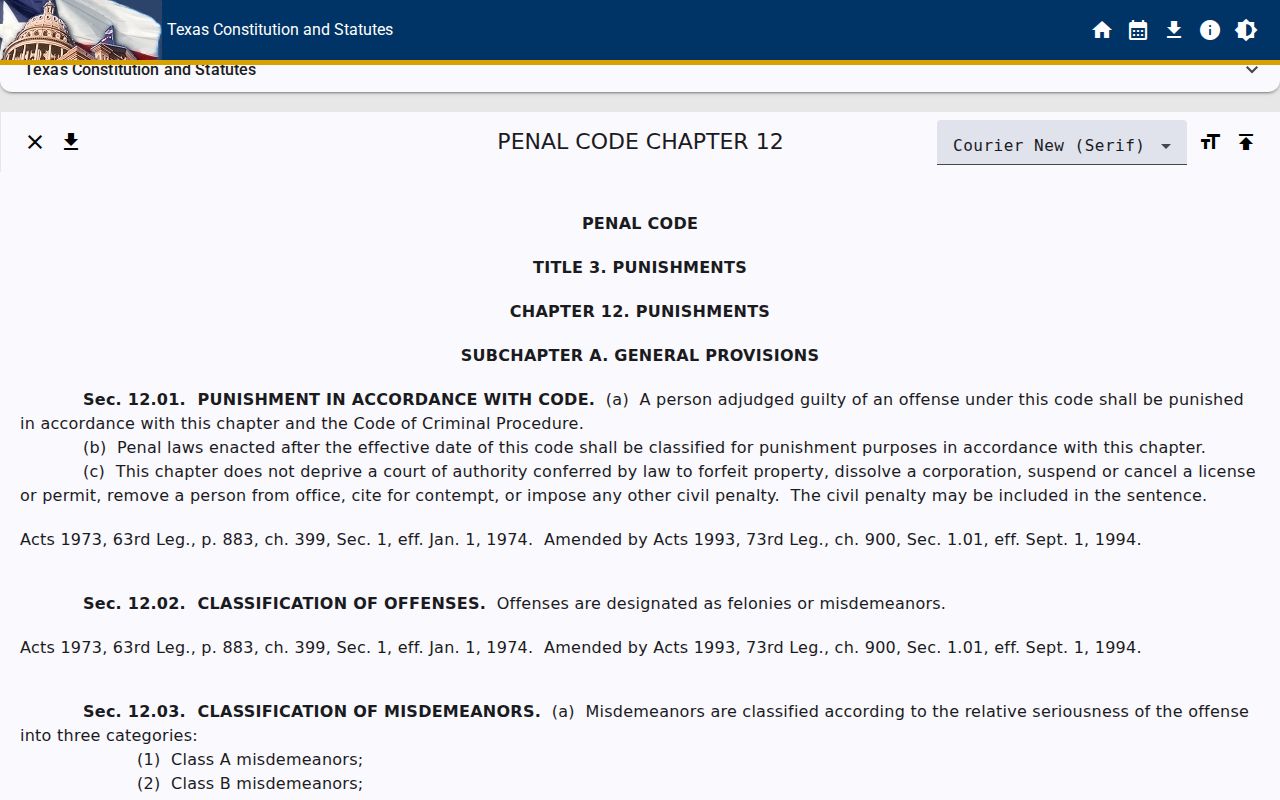
The class on a filed count helps explain both the court assignment and the possible sentencing range, but the judgment controls the actual result.
Confirm Parmer County Case Venue
The 287th Judicial District serves both Parmer and Bailey Counties. A search that shows the same district judge does not prove that a case was filed in Parmer County. Check the county, court, and clerk named on the docket. If the case belongs to Bailey County, obtain the record from that county's filing clerk rather than asking the Parmer District Clerk to supply a file it does not keep.
This check is small but vital. It prevents a no-result from being misread and keeps cause numbers tied to the correct custodian. The same principle applies to federal cases. A federal prosecution tied to Parmer County belongs in the U.S. District Court for the Northern District of Texas and is searched through PACER, not through the local district or county clerk.
The federal judiciary explains that separate channel through PACER.
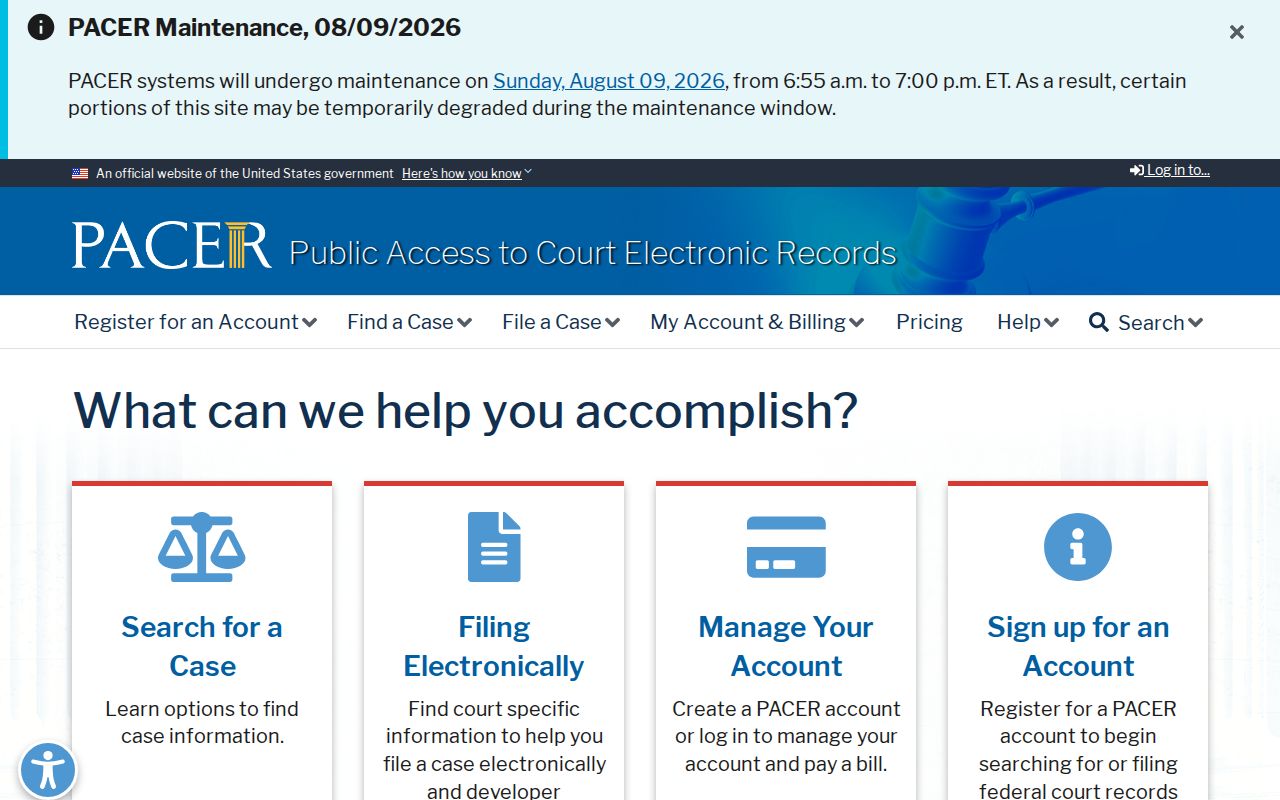
PACER requires an account and follows the federal judiciary's fee rules; sealed federal material remains unavailable.
Access & Restrictions
Texas court files are obtained through the clerk and judicial record rules. They are not simply sheriff records governed by every executive-agency procedure in the Texas Public Information Act. Remote views can omit documents that are available from the clerk, and a document link may depend on the court's participation, user role, access rule, or fee.
Access also has lawful limits. Sealed or expunged matters, juvenile cases, grand-jury material, protected victim identifiers, sensitive exhibits, and documents restricted by order or rule may be withheld or redacted. If a Parmer County criminal case does not appear online, ask the proper clerk whether it exists and whether access is restricted. Do not infer either innocence or guilt from a portal gap.
Resolve Parmer County Record Conflicts
A Texas computerized criminal history can contain arrest, prosecution, and disposition segments reported by several agencies. Missing or unmatched reports can make an older entry look incomplete. A blank disposition does not prove that a Parmer County case remains pending. It can also reflect lag, an identity variation, or a report that did not link correctly.
First obtain the certified judgment or dismissal from the Parmer County clerk that entered it. Then use the Texas DPS error-resolution channel when reviewing an inaccurate state record. DPS lists 512-424-7256 for inaccurate-data reports. The clerk proves the court outcome; DPS controls correction of its repository copy. Texas expunction law is a separate court remedy and is not automatic after dismissal.
Eligibility under Chapter 55A is fact-specific, so the exact Parmer cause number and disposition should be gathered before evaluating that process.
Note: A certified clerk record is stronger evidence of a Parmer County case outcome than a saved portal result.